

PRP for Vaginal Rejuvenation: Benefits, Effectiveness & What to Expect
Dubai’s trusted approach to non-surgical intimate wellness – led by a board-certified specialist
If you’ve been quietly researching PRP for vaginal rejuvenation, you’re probably sitting somewhere between curiosity and distrust. Intimate health topics rarely get discussed with the same clarity as, say, skincare, so patients are often left piecing together information from forums and ads.
At Dr Marwa ElAjami’s practice, this conversation is handled differently. As Head of Female Cosmetic Gynaecology and a US Board-certified specialist with over two decades of experience across the region, Dr Marwa offers vaginal PRP treatment as part of a considered, evidence-informed approach.
This guide walks through what platelet rich plasma vaginal rejuvenation actually involves, what it can realistically do, and how to know whether it’s worth discussing at your next consultation.
What is PRP For Vaginal Rejuvenation?
PRP vaginal rejuvenation is a minimally invasive treatment in which platelet-rich plasma is prepared from a small sample of the patient’s blood and injected into selected vaginal or vulvovaginal tissues. Platelets contain growth factors involved in normal tissue repair.
The aim of platelet rich plasma vaginal rejuvenation is therefore not to surgically remove tissue or physically alter the vaginal structure, but to support tissue quality and the body’s natural healing processes.
- Uses your own blood, no synthetic fillers or donor tissue
- Non-hormonal, so it sits apart from oestrogen creams or HRT
- Performed in-clinic, without the recovery time associated with surgical vaginal rejuvenation
Potential goals of PRP for vaginal rejuvenation include:
- Vaginal tissue quality and elasticity
- Hydration and comfort
- Sexual well-being in appropriately selected patients
- Certain symptoms associated with tissue changes
How Does PRP Vaginal Rejuvenation Work?
Step 1: Blood collectionA small blood sample is taken, similar to routine bloodwork, nothing more involved than a standard lab draw. | Step 2: Preparing platelet-rich plasmaThe sample is centrifuged to separate the platelet-rich layer from red blood cells, thereby concentrating platelets and associated growth factors involved in the body’s normal tissue-repair processes. | Step 3: Targeted injectionAfter topical numbing, the prepared plasma is injected into specific areas of the vaginal wall or surrounding tissue, depending on the concern being addressed. | Step 4: Tissue response and healingOver the following weeks, The growth factors released by the platelets are thought to support processes involved in tissue repair, vascular response and collagen remodelling. |
What Are The Potential Benefits of Vaginal PRP?
Patients considering PRP vaginal rejuvenation are typically looking to address one or more of the following:
- Improved vaginal tissue elasticity and firmness
- Better natural lubrication for those experiencing dryness
- Enhanced sensitivity and sensation
- PRP for vaginal laxity, particularly after childbirth
Some studies have reported improvements in vaginal health and sexual-function measures following PRP injections. However, this does not mean every patient will experience the same results.
Dr Marwa also offers other regenerative approaches, including exosome-based treatments, allowing the treatment plan to be tailored to the patient’s concerns and clinical assessment.
Does PRP For Vaginal Rejuvenation Really Work?
The honest answer is: PRP appears promising, but it is not a guaranteed solution for every vaginal concern.
PRP has been used in orthopaedic medicine, dentistry, and hair restoration for years before being adapted for intimate health, and published research on PRP treatment for vagina applications shows encouraging patient-reported improvements in sensation, lubrication and comfort.
However, the researchers also highlighted differences in PRP preparation, injection techniques, treatment schedules and study design.
This is why a consultation matters. PRP for vaginal rejuvenation should be considered based on the underlying concern rather than as a standard treatment.
What Conditions Can Vaginal PRP Be Considered For?
Depending on the patient’s medical history and examination, PRP for vaginal laxity or other vaginal concerns may be considered in selected cases involving:
- Vaginal dryness or tissue changes associated with menopause
- Certain vulvovaginal tissue changes
- Selected sexual-function concerns
- Some concerns relating to tissue quality or elasticity
It’s not intended to replace treatment of underlying gynaecological conditions, Dr Marwa will assess whether PRP is appropriate or whether another pathway suits you better.
What Happens During a PRP Vaginal Treatment?
A PRP vaginal treatment Dubai consultation generally begins with a discussion of symptoms, expectations and medical history. A gynaecological assessment may then help determine whether PRP is appropriate.
A typical vaginal PRP treatment appointment includes:
- Blood collection
- Preparation of PRP
- Targeted injections
- Brief observation and post-treatment advice
- Follow up where appropriate
The aim is to create a treatment plan around the individual rather than simply perform a predetermined number of injections.
Is vaginal PRP painful?
Topical numbing is applied beforehand, so most patients describe mild pressure or a pinching sensation rather than significant pain. The procedure itself is brief.
Are there any side effects of Vaginal PRP?
Because PRP is prepared from your own blood, the risk of an allergic reaction is low. PRP is minimally invasive, but it is not completely risk-free.
Possible short-term effects include:
- Mild swelling or tenderness at injection sites
- Light spotting
- Temporary sensitivity usually settles within a few days
How many PRP Sessions Are Needed?
There is no universally established number of sessions for PRP vaginal rejuvenation. Published studies have used different treatment schedules, which is one reason treatment plans should be personalised.
Most protocols involve a short series of sessions spaced several weeks apart, with the exact number tailored to your goals and your tissue’s response. Dr Marwa will outline a personalised plan during consultation rather than a generic package.
PRP vs Laser Vaginal Rejuvenation - What's The Difference?
Both are non-surgical approaches, but vaginal rejuvenation and PRP work differently.
Feature | PRP Vaginal Rejuvenation | Laser Vaginal Rejuvenation |
Approach | Injectable treatment using the patient’s own PRP | Energy-based treatment using laser technology |
Principle | Uses platelet-rich plasma and associated growth factors | Uses controlled laser energy to create a tissue response |
Surgical? | No | No |
Material used | Patient’s own blood-derived PRP | No injectable biological material |
Treatment plan | Depends on symptoms and clinical assessment | Depends on the device, indication and clinical assessment |
Evidence | Promising but still developing | Evidence varies by indication and technology |
These treatments should not be viewed as interchangeable or automatically better than one another. A gynaecological assessment can help determine whether either option is appropriate.
PRP vs Surgical Vaginoplasty
It is important to distinguish PRP for vaginal tightening from surgical vaginoplasty.
PRP | Surgical Vaginoplasty |
Non-surgical | Surgical |
Uses the patient’s own PRP | Surgically modifies vaginal tissues |
No tissue excision | May involve tissue removal or repair |
Minimally invasive | Requires surgical recovery |
Focuses on tissue quality | Can address structural laxity |
Dr Marwa’s practice is particularly suited to this decision-making process because she provides both non-surgical vaginal rejuvenation and surgical vaginal tightening. She provides PRP alongside other regenerative approaches for improving vaginal elasticity, hydration and sensation, while surgical vaginal tightening is available for appropriate patients.
Vaginal PRP treatment in Dubai with Dr Marwa ElAjami
Choosing where to have vaginal PRP Dubai performed matters as much as the treatment itself.
Dr Marwa ElAjami combines international qualifications with extensive experience in cosmetic gynaecology.
International qualifications | Experience | Specialist role |
American Board-Certified Aesthetic Gynecologist; MRCOG (UK) | 20+ years of international experience | Head of Obstetrics & Gynecology at Cosmesurge Hospital Dubai |
Advanced training in cosmetic and reconstructive gynaecology | Experience across the UAE and wider region | International speaker and trainer in cosmetic gynaecology |
Her PRP vaginal treatment Dubai approach favours realistic expectations over rushed promises, with treatment plans built around each patient’s individual anatomy and goals.
Ready To Talk it Through? A Personalised Approach To Vaginal Rejuvenation
PRP for vaginal rejuvenation may be an appealing option for women seeking a minimally invasive approach to vaginal tissue concerns.
With her international qualifications, extensive experience in cosmetic gynaecology, and access to both surgical and non-surgical options, Dr Marwa ElAjami can help women explore an appropriate treatment pathway rather than choosing a procedure based on a trend.
Vaginal PRP Dubai patients deserve honest answers before treatment. If you’re considering PRP vaginal rejuvenation, book a consultation with Dr Marwa ElAjami to find out whether it’s the right fit for you.
About the Author
Dr. Marwa ElAjami
Consultant Gynecologist, Obstetrician & Aesthetic Gynecologist
- American Board-Certified Aesthetic Gynecologist
- MRCOG (UK)
- Head of Obstetrics & Gynecology – Cosmesurge Hospital Dubai
- 20+ Years of International Experience
- International Speaker & Trainer in Cosmetic Gynecology
Dr. Marwa ElAjami is an internationally certified Consultant Gynecologist and Obstetrician with over 20 years of experience in women’s health, obstetrics, and aesthetic gynecology across the UAE, Bahrain, Saudi Arabia, and Egypt. Recognized for her patient-centered approach and advanced expertise in both medical and cosmetic gynecology, she is regarded as one of the leading female gynecologists in Dubai.
She currently serves as the Head of the Department of Obstetrics & Gynecology at Cosmesurge Hospital Dubai and also practices in Abu Dhabi. Dr. Marwa specializes in aesthetic and functional gynecology, high-risk obstetrics, infertility management, hormonal disorders, menopause care, minimally invasive gynecological procedures, and advanced vaginal rejuvenation treatments.
Dr. Marwa holds prestigious international qualifications including the American Board Certification in Aesthetic Gynecology, MRCOG (UK), Membership of the Royal College of Physicians of Ireland, and multiple advanced certifications in cosmetic and reconstructive gynecology. She is also an international speaker, trainer, and key opinion leader for leading aesthetic medical organizations and conferences worldwide.
Known for combining innovation, compassion, and evidence-based care, Dr. Marwa is committed to helping women achieve better health, confidence, and overall wellbeing through personalized treatment plans tailored to every stage of life.
Medical Disclaimer
This article is intended for informational and educational purposes only and should not be considered medical advice, diagnosis, or treatment. Always consult a qualified healthcare professional regarding any gynecological, obstetric, or medical concerns before making healthcare decisions.
Medically reviewed by Dr. Marwa ElAjami, Consultant Gynecologist, Obstetrician & Aesthetic Gynecologist.

Laser Vaginal Tightening in Dubai: How it Works, Benefits & What To Expect?
PRP for Vaginal Rejuvenation: Benefits, Effectiveness & What to Expect As your body goes through changes, whether it’s due to childbirth, hormonal fluctuations, or simply

PRP for Vaginal Rejuvenation: Benefits, Effectiveness & What to Expect
PRP for Vaginal Rejuvenation: Benefits, Effectiveness & What to Expect Dubai’s trusted approach to non-surgical intimate wellness – led by a board-certified specialist If you’ve
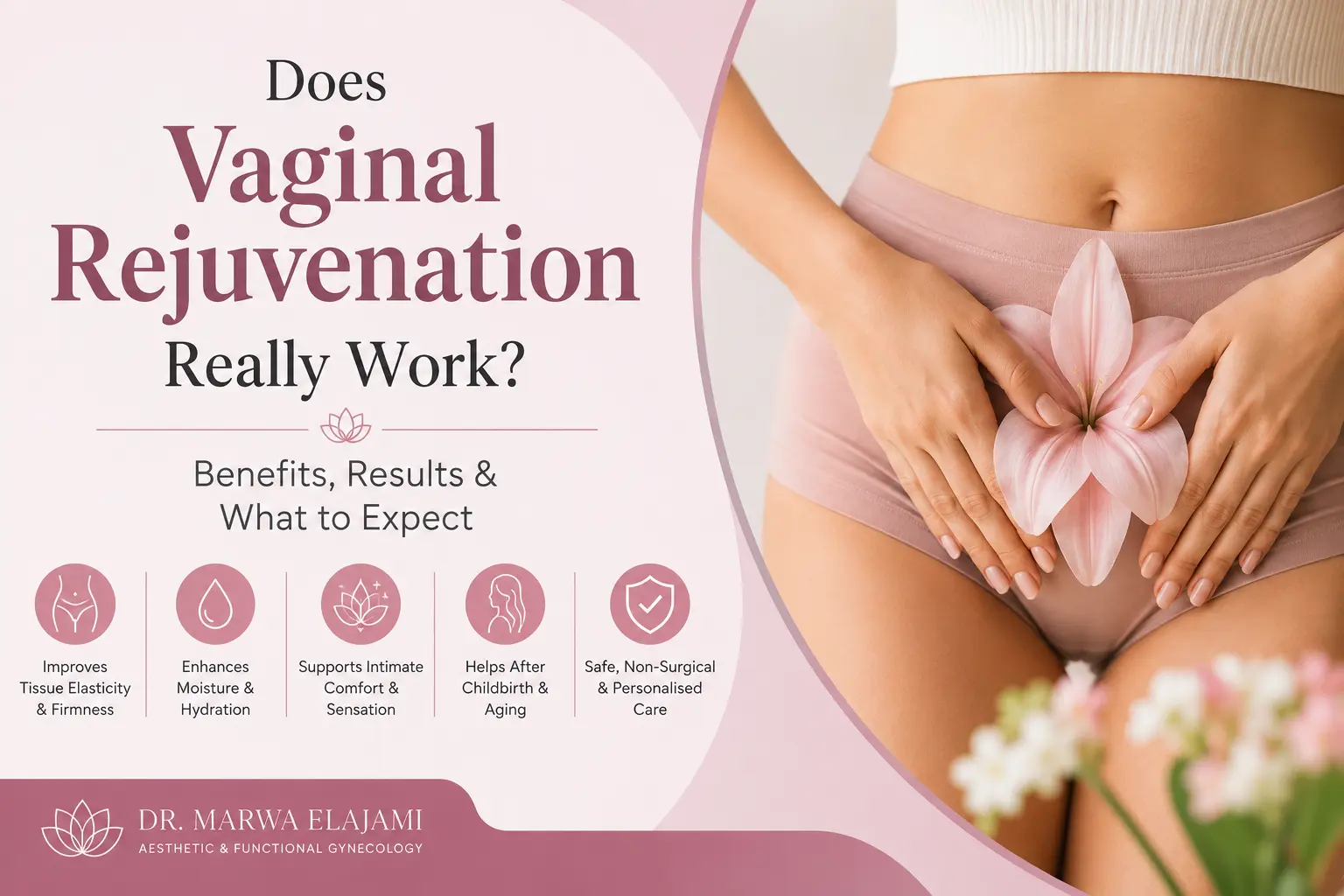
Does Vaginal Rejuvenation Really Work? Benefits, Results & What to Expect
Does Vaginal Rejuvenation Really Work? Benefits, Results & What to Expect Have you noticed changes in vaginal comfort, elasticity, moisture, or sensation after childbirth or

What Is Cosmetic Gynecology? Procedures, Benefits & Who Is a Good Candidate?
What Is Cosmetic Gynecology? Procedures, Benefits & Who Is a Good Candidate? Women’s intimate health can change throughout life. Pregnancy, childbirth, ageing, hormonal fluctuations and
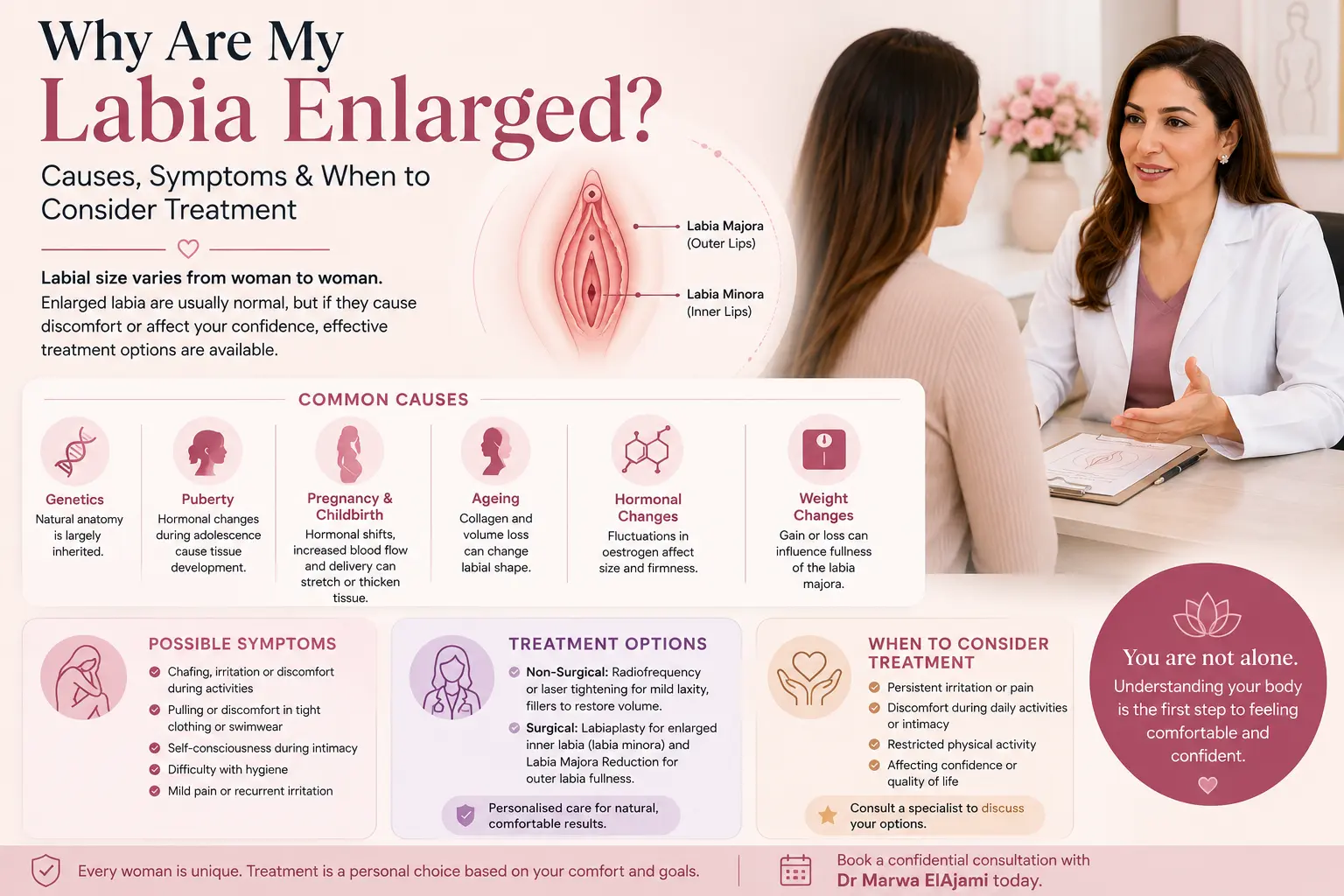
Why Are My Labia Enlarged? Causes, Symptoms & When to Consider Treatment
Why Are My Labia Enlarged? Causes, Symptoms & When to Consider Treatment If you have ever quietly wondered ‘why are my labia enlarged’, you are
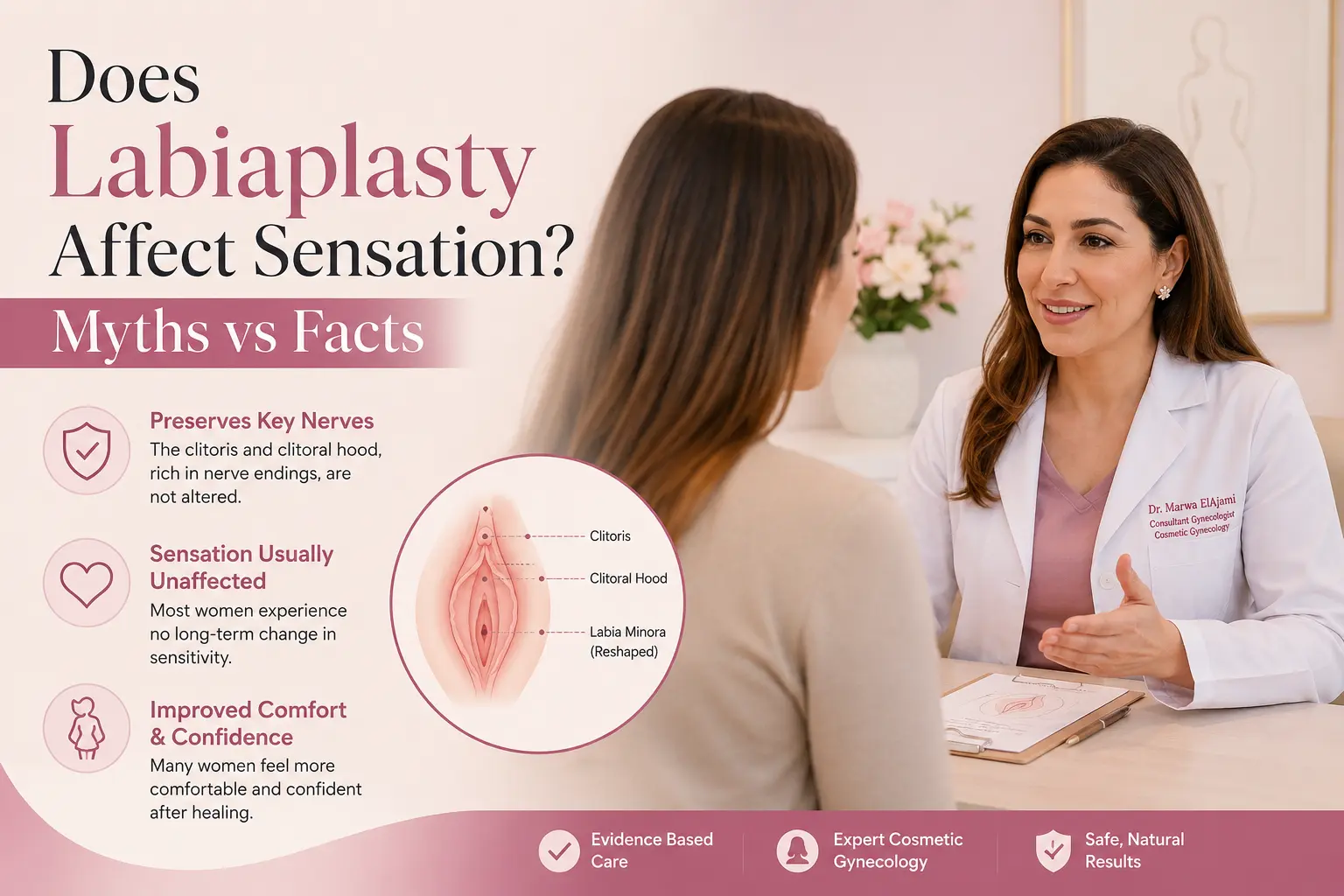
Does Labiaplasty Affect Sensation? Myths vs Facts
Does Labiaplasty Affect Sensation? Myths vs Facts For many women, one quiet worry sits behind an otherwise confident decision: Does labiaplasty affect sensation? It is
Contact For More information
Take the First Step
Frequently Asked Questions
It’s a non-surgical treatment that uses concentrated platelets from your own blood to stimulate natural tissue repair and improve comfort, elasticity, and sensation in the vaginal area.
PRP may improve tissue hydration and symptoms in some women, particularly where dryness is associated with vulvovaginal tissue changes, but results vary.
PRP can support mild improvements in tissue elasticity, but it isn’t a substitute for surgical vaginoplasty in cases of more significant laxity.
Most appointments, including blood draw, preparation and injection, are completed within roughly an hour.
The duration of results varies and is not yet firmly established because published studies use different protocols and follow-up periods.
As it uses your own blood, the risk of allergic reaction is low, though mild swelling or spotting can occur.
There is no universally established number of sessions. Published studies use different protocols, so the recommended schedule should be based on your symptoms, goals and clinical response.
Combining treatments may be considered in selected cases, but there is limited evidence to establish a standard combined protocol. A specialist should assess whether using both approaches is appropriate.